
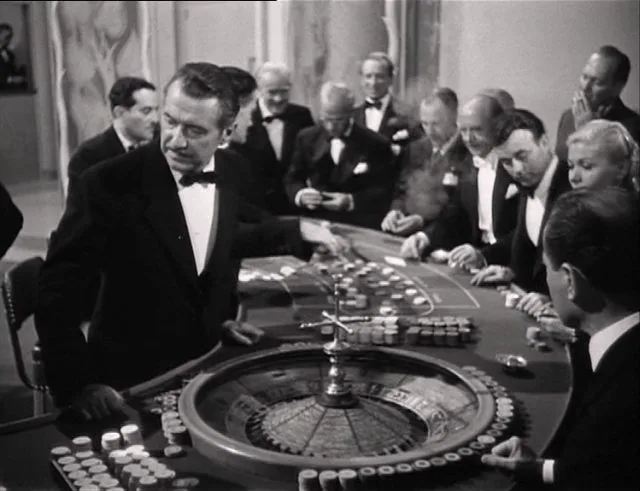
Gilda
A gambler's wife becomes entangled in a web of obsession and betrayal in Buenos Aires, with a famous casino scene central to the plot.
Explore films connected to casinos, poker, gambling, and heists by decade. Use the timeline below to jump to a specific era. The archive covers films from the 1940s to the 2020s, and each decade includes a brief editorial overview of cinematic trends and a list of relevant films.
The 1940s and 1950s saw the emergence of film noir, often featuring gambling as a backdrop for moral ambiguity and crime. Films like Gilda (1946) and The Lady Gambles (1949) used casinos as settings for drama and suspense. The era reflected post-war anxieties and the allure of risk, with shadowy interiors and morally complex characters becoming defining features of the period's cinema.
A gambler's wife becomes entangled in a web of obsession and betrayal in Buenos Aires, with a famous casino scene central to the plot.
A woman's descent into compulsive gambling threatens her marriage and sanity, with Las Vegas casinos as a key setting.
Private detective Philip Marlowe investigates a wealthy family, with a high-stakes gambling subplot involving a casino owner.
A meticulously planned jewellery heist unravels, with a corrupt lawyer and a casino owner playing pivotal roles.
The 1960s brought stylish heist films, with casinos as prime targets. Ocean's 11 (1960) set the template for ensemble heist movies, combining Rat Pack charisma with an audacious Las Vegas robbery. The decade also saw gambling as a theme in European cinema, with directors exploring the tension between chance and control against increasingly glamorous backdrops.
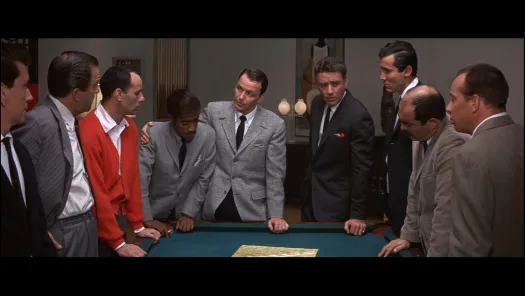
A group of World War II veterans plan to rob five Las Vegas casinos simultaneously on New Year's Eve.
A satirical spy romp loosely based on Ian Fleming's novel, featuring a high-stakes baccarat game as a central set piece.
A small-time pool hustler challenges a legendary player, with gambling and obsession driving the narrative.
An aging gambler plans a casino heist in Deauville, blending French New Wave style with noir fatalism.
The 1970s saw a shift toward gritty, realistic portrayals of gambling and its consequences. Films like California Split (1974) and The Gambler (1974) explored addiction and desperation with unflinching honesty. The era's New Hollywood movement allowed for darker themes, moving away from glamorous heists to focus on the psychological toll of risk and loss.
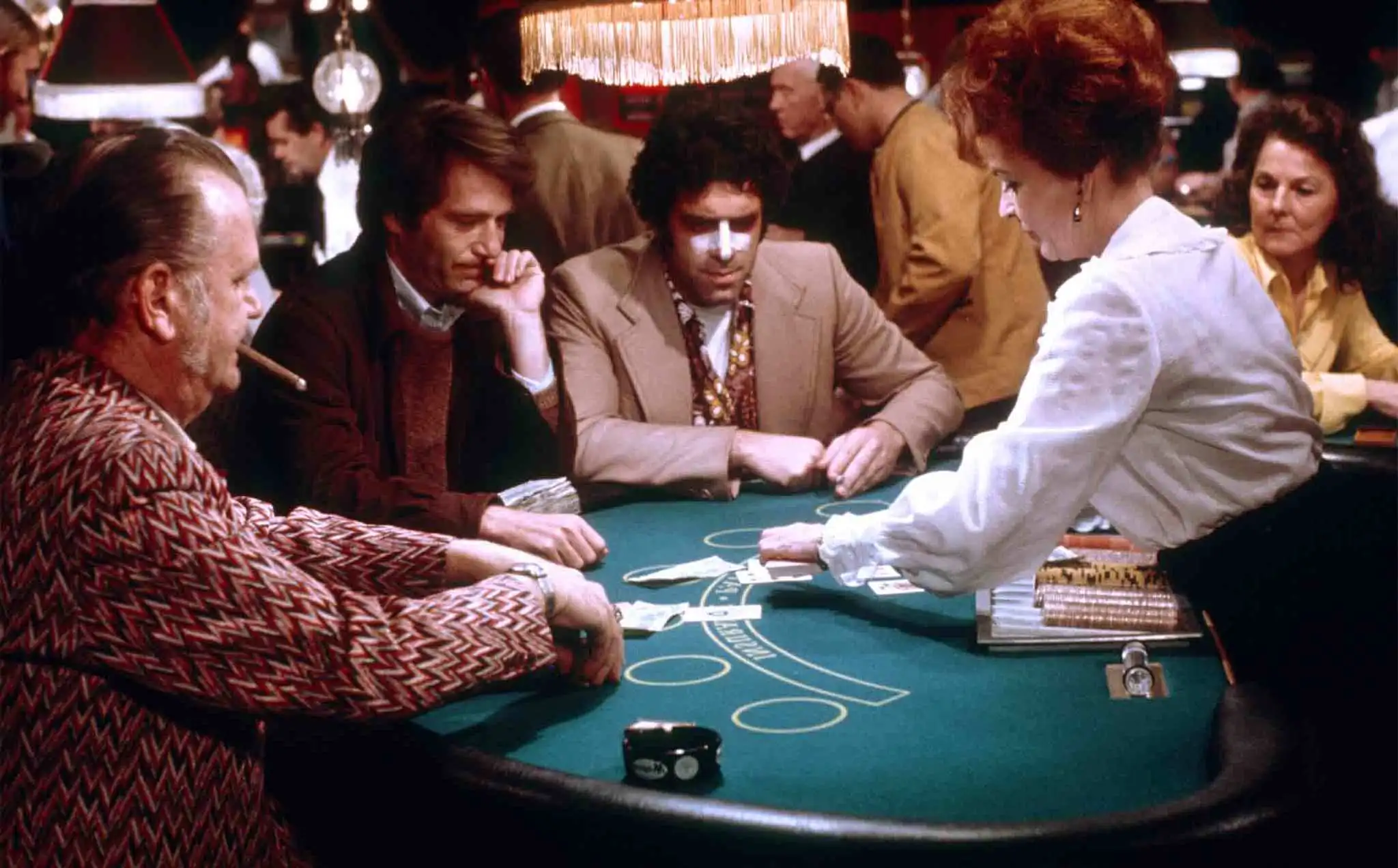
Two gamblers form an uneasy friendship as they chase a big score, capturing the highs and lows of compulsive betting.
A literature professor's gambling addiction spirals out of control, threatening his career, relationships, and life.
Two con men orchestrate an elaborate scheme to take down a ruthless crime boss, with a high-stakes poker game as a key scene.
A young poker player challenges the reigning champion in a high-stakes game, exploring themes of ambition and integrity.
The 1980s embraced excess, with flashy casino settings and high-stakes drama. Films like Rain Man (1988) featured casino scenes as key plot points, while comedies set in Las Vegas captured the decade's appetite for spectacle. The era balanced glossy entertainment with moments of genuine tension, reflecting a culture fascinated by wealth and risk.
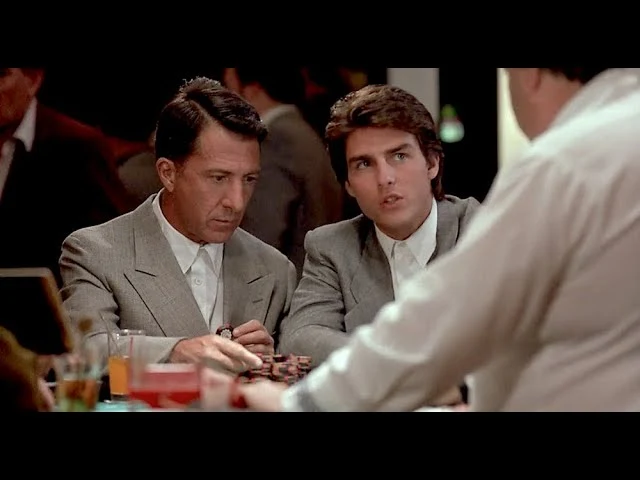
A self-centred man discovers his autistic brother has a remarkable memory, leading to a transformative trip that includes a casino card-counting scene.
An aging pool hustler mentors a young protégé, with gambling halls and high-stakes matches driving the narrative.
A family's Las Vegas holiday spirals into comedic chaos, with casino culture serving as the backdrop for slapstick and satire.
A professional safecracker attempts one final heist, with a casino vault as a central target in this stylish neo-noir.
The 1990s produced iconic casino films, often epic in scope and character-driven. Casino (1995) and Rounders (1998) are key examples. The decade explored both the glamour and the dark side of gambling, with directors using the casino as a microcosm of ambition, corruption, and the American dream.
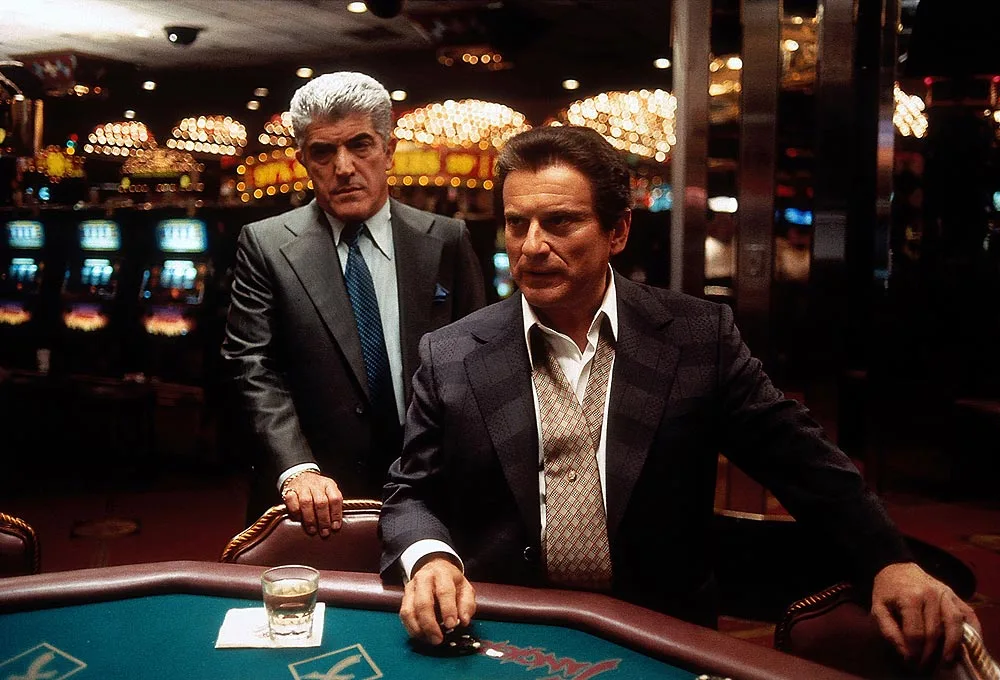
A detailed chronicle of the rise and fall of a Las Vegas casino executive, exploring the intersection of organised crime and gambling.
A reformed poker player returns to the underground card rooms of New York to help a friend pay off a dangerous debt.
A master thief and a dedicated detective play a cat-and-mouse game, with a casino robbery sequence among the film's set pieces.
A group of young actors navigate Los Angeles nightlife, with a memorable blackjack scene in Las Vegas highlighting the film's themes of risk and friendship.
Recent decades have seen a resurgence of heist films and diverse gambling narratives. The Ocean's trilogy (2001–2007) revitalized the genre with slick ensemble casts and intricate plots. Films like 21 (2008) and Molly's Game (2017) explore true stories, while streaming platforms have expanded the range of casino-related storytelling.
A recently paroled con man assembles a team to rob three Las Vegas casinos simultaneously, blending style, wit, and precision.
Based on a true story, MIT students use card-counting techniques to win millions in Las Vegas before attracting unwanted attention.
The true story of Molly Bloom, who ran high-stakes underground poker games for celebrities and business tycoons before being targeted by the FBI.
Two brothers attempt a heist during a NASCAR race, with a casino vault as the target in this comedic crime caper.
The trend summaries above reflect Film Fact World's editorial interpretation based on available film data. They are not presented as definitive historical analysis. Individual film facts are verified, but broader trends are subjective. Visitors are encouraged to explore the film files for factual details.